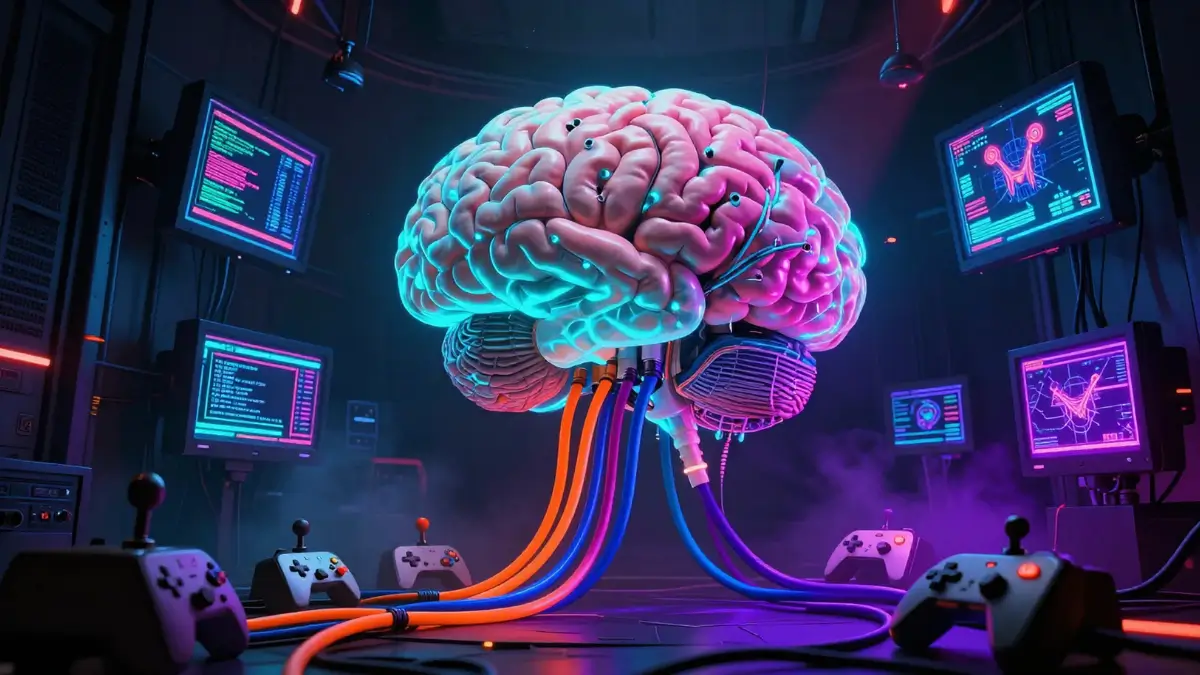
The gaming industry stands at a pivotal moment. Artificial intelligence gaming has evolved from simple enemy patterns to sophisticated systems that create, adapt, and respond in ways that were unimaginable just five years ago. Whether you're battling NPCs that learn from your tactics or exploring worlds generated on-the-fly, AI in video games is fundamentally reshaping what's possible in interactive entertainment.
💡 Takeaway:
AI is transforming video games from scripted experiences into dynamic, personalized adventures where NPCs think strategically, worlds generate intelligently, and gameplay adapts to each player's unique style.
The Evolution of NPC AI: From Predictable to Brilliant
Gone are the days when enemy AI followed predetermined patrol routes. Modern NPC AI leverages machine learning to create adversaries that observe, adapt, and challenge players in unprecedented ways.
Dynamic Decision-Making
Today's NPCs analyze player behavior in real-time. In titles like The Last of Us Part II and Alien: Isolation, enemies communicate, flank strategically, and adjust their aggression based on your skill level. The xenomorph in Alien: Isolation famously uses neural networks to hunt players unpredictably, never following the same pattern twice.
Conversational Intelligence
Large language models are now entering the gaming space. Imagine NPCs that can hold genuine conversations beyond pre-written dialogue trees. Studios are experimenting with AI-driven characters that remember your previous interactions and respond contextually, creating deeper narrative immersion.
Procedural Generation Gets Smarter
Procedural generation isn't new, but artificial intelligence gaming has elevated it from random chaos to intentional design.
Intelligent World Building
AI algorithms now generate game worlds that feel hand-crafted. No Man's Sky uses sophisticated systems to create billions of planets with coherent ecosystems. Meanwhile, AI-powered tools help developers design levels faster, analyzing player flow data to optimize challenge curves and pacing automatically.
Personalized Content Creation
Machine learning models study your playstyle to generate custom challenges. Roguelikes like Hades already adjust difficulty dynamically, but next-generation systems will craft entire quest lines tailored to your preferences, ensuring every playthrough feels uniquely yours.
The Industry Perspective: What Developers Are Saying
At ProGameer, we track these developments closely as part of our commitment to delivering cutting-edge gaming news and market analysis. As a professional platform for gaming enthusiasts, we've observed how AI integration has become the top priority for AAA studios and indie developers alike, with over 60% of game companies now investing heavily in AI research and implementation.
Cost Efficiency Meets Creative Potential
AI tools are democratizing game development. Small studios can now achieve visual fidelity and gameplay depth that previously required massive teams. Procedural animation systems generate realistic character movements, while AI voice synthesis creates thousands of dialogue variations, all at a fraction of traditional costs.
Challenges and Ethical Considerations
The Human Touch Concern
Critics worry that over-reliance on AI could strip games of their artistic soul. There's validity here, algorithmic generation lacks intentional emotional design. The best implementations use AI as a tool that amplifies human creativity rather than replacing it.
Job Displacement and Fair Use
The gaming industry faces tough questions about AI-generated content and its impact on artists, writers, and voice actors. Establishing ethical guidelines for AI implementation remains an ongoing conversation that will shape the industry's future.
What's Coming Next?
The next frontier combines multiple AI systems working in concert. Imagine games where:
- Adaptive storytelling engines craft narratives that evolve based on player choices and emotional responses
- Real-time graphics optimization adjusts visual fidelity based on scene importance
- AI game masters orchestrate multiplayer experiences like a human dungeon master in tabletop gaming
Companies like NVIDIA and Unity are already developing AI-powered tools that will make these scenarios reality within the next 2-3 years.
Final Thoughts
AI in video games represents more than a technological upgrade, it's a paradigm shift in how we create and experience interactive entertainment. From NPC AI that rivals human players to procedural generation that builds infinite, meaningful worlds, artificial intelligence is unlocking possibilities that seemed like science fiction a decade ago.
The key is balance. The most successful implementations will blend algorithmic intelligence with human artistry, creating experiences that are both technically impressive and emotionally resonant.
🚀 Bottom Line: AI is transforming gaming from static experiences into living, breathing worlds that adapt to players, making every session unique while giving developers unprecedented creative power.
References
- Game Developers Conference (GDC) - "The State of AI in Game Development 2024"
- IGN - "How Machine Learning Is Changing Game Design Forever"
- MIT Technology Review - "The Promise and Peril of AI-Generated Game Content"